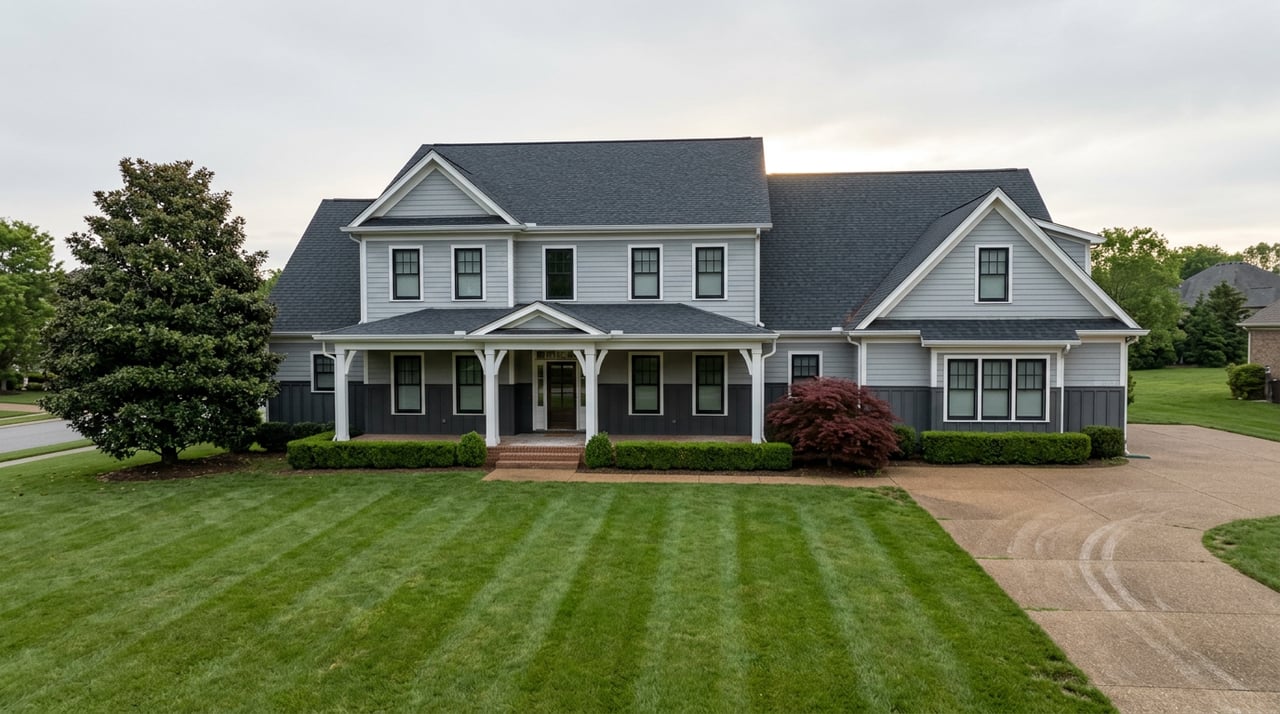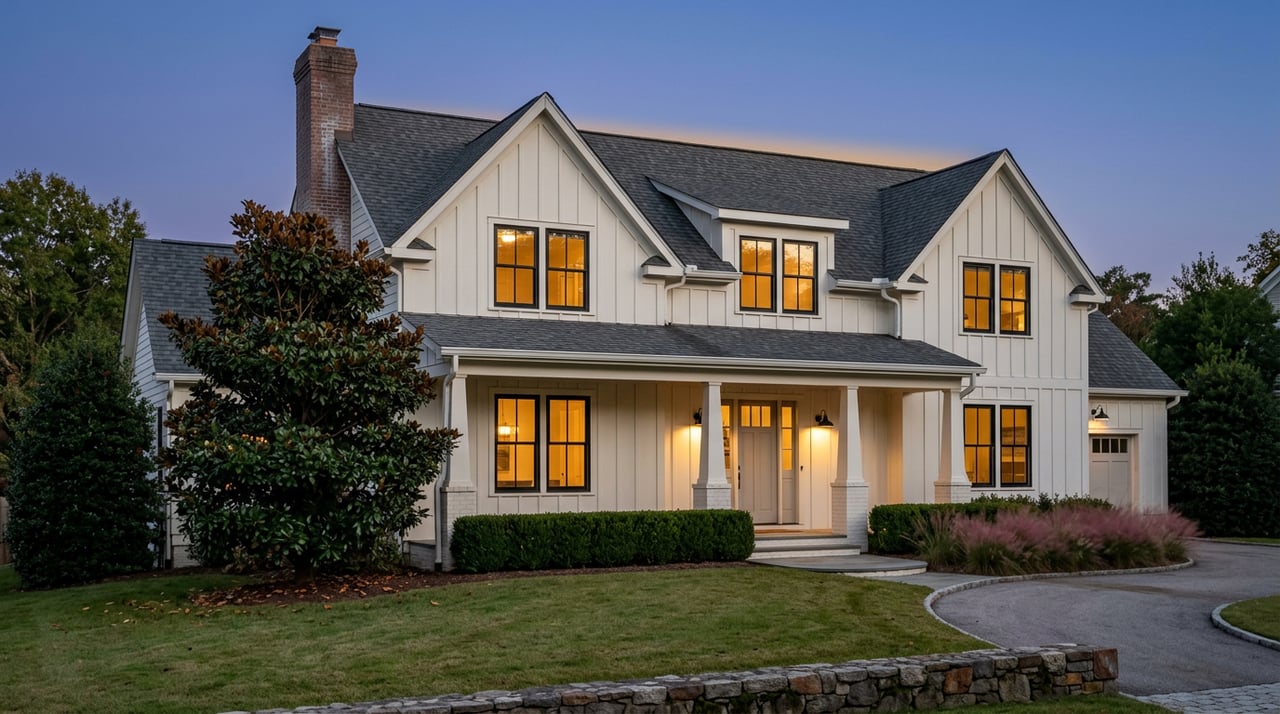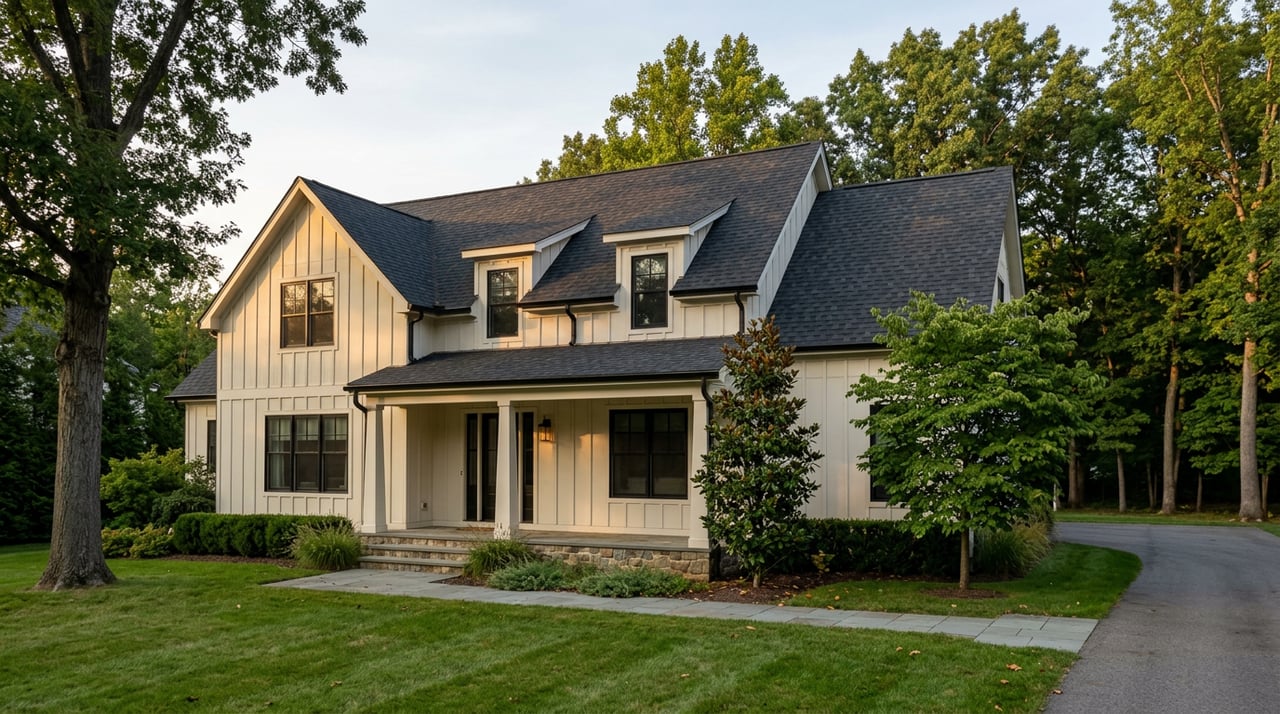
Picture two houses on Lookout Mountain, priced within a few thousand dollars of each other, both a short walk from the cluster of small shops and cafes along Scenic Highway, both close enough to hear the same church bells on a Sunday morning. A buyer touring both assumes they're comparing two homes in the same market. They aren't. One sits in the town of Lookout Mountain, Tennessee. The other, a few streets over, sits in the city of Lookout Mountain, Georgia. Two separate governments. Two separate budgets. Two separate answers to the same question every reappraisal forces a local government to ask: how much of the new value gets passed on to the homeowner.
This year, those two governments answered that question in opposite directions.
Same Mountain, Opposite Playbook
The Tennessee side just raised its rate. After Hamilton County's reappraisal pushed property values up, the county set a certified rate of $1.55 per $100 of assessed value, the number that would have kept the town's tax revenue flat despite higher valuations. The Lookout Mountain, Tennessee commission voted instead to set the 2026 rate at $1.63, five percent above that certified figure. It was at least the second year running that the town went above the certified rate rather than sit at it. The reasoning, given by town officials at the meeting, was straightforward: the town has almost no retail or commercial development to generate sales tax, so property owners absorb nearly the full cost of running the town.
The Georgia side, facing the same regional wave of rising valuations, went the other way. In October 2025, the city council in Lookout Mountain, Georgia set its 2026 millage rate at 6.2 mills, down from 6.4 the year before, explicitly to avoid what officials called a windfall from higher reappraisals. The city will still collect about $36,000 more in property tax revenue for the year, but that's growth tied to new construction and value increases, not to a higher rate squeezing more out of existing homeowners.
Two towns, one mountain, one reappraisal cycle, two different fiscal philosophies. That's not a coincidence of timing. It's what happens when a small municipality's income comes almost entirely from the value of the homes inside its borders. On the Tennessee side, town leaders have said plainly that there isn't enough retail on the mountain to fund basic operations any other way, and rates have climbed by five to six percent in most recent years as a result. Back in July 2025, the Nashville Tennessean ranked the Tennessee town the most envied place to live in the state, noting that it's "known for its stunning views, stately homes and slower pace of life." That reputation comes with a bill attached, and the bill has kept climbing since.
Why You Can't Compare the Numbers Directly
Here's where a buyer moving between the two sides can talk themselves into the wrong conclusion. A rate of $1.63 per $100 sounds much higher than a rate of 6.2 mills per $1,000. It isn't, because the two states don't assess property the same way.
In Tennessee, a home's assessed value for tax purposes is 25 percent of its appraised market value. In Georgia, the city assesses at 40 percent of appraised value. So a $1.63 rate applied to a 25 percent assessment base and a 6.2 mill rate applied to a 40 percent assessment base are answering different math problems, and the sticker numbers alone tell you almost nothing about the actual dollars leaving your account each year.
What matters is the effective rate: the annual tax bill divided by the home's market value. One property-tax analysis firm puts the median effective rate on the Tennessee side at roughly 0.56 percent, with a median annual bill around $3,129. On the Georgia side, Walker and Dade County effective rates, which include county and school levies on top of the city's own millage, tend to run in the 0.6 to 0.9 percent range. Neither number is dramatically out of line with the other, which is exactly the point: the useful comparison isn't the rate you see quoted at a public meeting, it's the effective rate on a specific address, and that number depends on the county, the school district, and any exemptions in place, not just which state the mailbox sits in.
The Exemption Cap One Side Has and the Other Doesn't
There's a second difference that matters more the longer you plan to stay in the house. In 2024, Georgia voters approved House Bill 581, a statewide floating homestead exemption that caps how much a homesteaded property's assessed value can grow each year, tying the increase to inflation rather than to full market appreciation. It only applies to owner-occupied primary residences, it doesn't transfer when the home sells, and local governments had a one-time window to opt out by March 2025. That window is closing for good: Georgia's 2026 HOME Act made the inflation cap mandatory statewide starting in 2027, so any city, county, or school district that opted out has only one tax year left before the cap applies to it anyway. Tennessee has no equivalent mechanism. Tennessee counties reassess property on a set cycle and require a certified, revenue-neutral rate afterward, but there's no cap on how much an individual owner-occupied home's assessed value can climb between reassessments, and a town can still vote above the certified rate the way Lookout Mountain, Tennessee just did.
Practically, that means a long-term owner-occupant on the Georgia side has a structural buffer against a hot market that a long-term owner-occupant on the Tennessee side doesn't have. It also means the buffer resets the moment the home changes hands, so a Georgia-side buyer inherits a fresh base year, not the seller's protected value.
| Lookout Mountain, TN | Lookout Mountain, GA | |
|---|---|---|
| Assessment ratio | 25% of appraised value | 40% of appraised value |
| 2026 municipal rate | $1.63 per $100 assessed | 6.2 mills per $1,000 assessed |
| 2026 rate direction | Up 5% over the certified rate | Down from 6.4 mills in 2025 |
| Homestead value cap | None | Yes, under HB 581, tied to inflation, resets on sale |
| State income tax | None | Yes |
What This Actually Means Before You Write an Offer
None of this tells a buyer which side of the mountain to choose. It tells you the question isn't "Tennessee or Georgia" in the abstract, it's "what does this specific address's tax jurisdiction, assessment, and exemption status look like right now." A listing can sit close enough to the state line that the answer isn't obvious from the street.
Before writing an offer on Lookout Mountain, it's worth confirming:
- Which county assessor's office actually values the property, Hamilton County or Walker/Dade County, since that determines the assessment ratio and the rate schedule that applies
- Whether the current owner has a homestead exemption in place, and if so, whether it will reset once the home sells
- Whether the relevant city or county has opted in or out of Georgia's inflation cap, since jurisdictions were given a window to opt out and some did
- The last three to five years of rate votes for that specific town, since a pattern of above-certified increases tells you more about future carrying costs than a single year's number
The Tennessee Comptroller publishes county-level assessment and rate data that's worth checking directly for any specific Hamilton County address. Georgia's Department of Revenue has published guidance on how the floating homestead exemption is calculated and which jurisdictions retained it.
The Short Version
Lookout Mountain reads as one market on a listing site and functions as two, with two town governments answering the same reappraisal in opposite ways this year, two different assessment ratios that make the headline rates impossible to compare at face value, and one state offering a homestead protection the other doesn't. A median price on either side tells you almost nothing about what you'll actually pay five years from now. The address does.
If you're weighing a move to Lookout Mountain and want the tax picture worked out for a specific property before you get attached to it, The Tiano Group can walk through the numbers on both sides of the line with you. Schedule a meeting and we'll help you compare more than the sign in the yard, or browse current listings on our Lookout Mountain neighborhood page.